
Listen · 16 min · A sample circle
A teacher and four members go through the passage ayah by ayah, then turn to two questions for your own circle.
The recording is available below. Listen in full or choose a chapter. For recitation alone, use the verses page, where every ayah has its own recitation, and the short read on the overview takes about two minutes.
IMATX Halaqa · Al-A‘raf 7:32
Who has forbidden the good things?
Chapter 02 · Joining the call
The du'a we
open with
“My Lord, increase me in knowledge.”
Chapter 03 · Where we are
Forbidding what
He allowed
Chapter 04 · Al-A‘raf 7:32
Brought out
for His servants
“Who has forbidden the adornment of Allah which He has produced for His servants…”
Chapter 05 · Al-A‘raf 7:33
What my Lord has forbidden
Chapter 06 · Al-A‘raf 7:34
A fixed term
for every nation
“…they will not remain behind an hour, nor will they precede [it].”
Chapter 07 · Al-A‘raf 7:35
Taqwa, and setting
things right
“…there will be no fear concerning them, nor will they grieve.”
Chapter 08 · Al-A‘raf 7:36
Denial
and pride
“But the ones who deny Our verses and are arrogant toward them…”
Chapter 09 · Your questions
Two questions to carry
- When does being stricter feel more religious?
- Why argue over what people eat, not how we treat them?
Chapter 10 · IMATX Halaqa · Session 05
Start a halaqa in your own circle
Free study pages for this passage
halaqa.imatx.org
Ready to listen
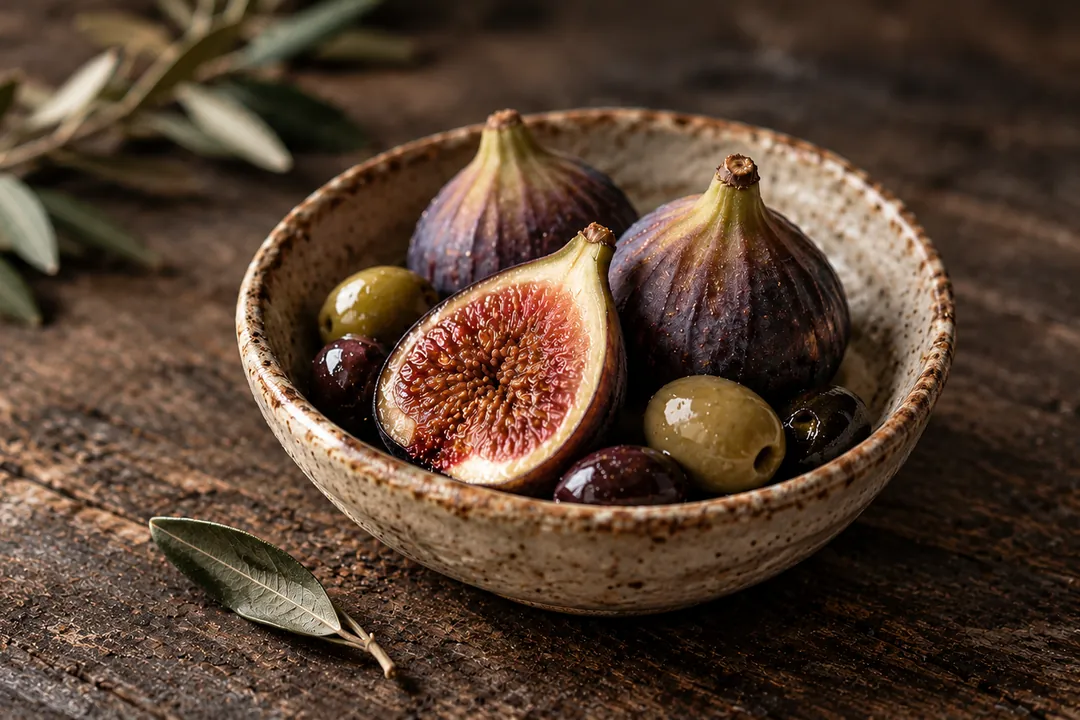
Symbolic images, made with AI · Headings on the picture are editorial summaries; the quoted lines are Saheeh International. Captions under the picture follow the narration, so the briefing also works with the sound off. As the narration stops on an Arabic word, that word appears in the picture; the Arabic words page has all of them in full.
What the briefing covers
- 0:00Who has forbidden the good things?
- 0:33Joining the call
- 1:12Where we are
- 1:43Ayah thirty-two - who has forbidden the good things
- 4:28Ayah thirty-three - what my Lord has actually forbidden
- 7:07Ayah thirty-four - a fixed term for every nation
- 9:05Ayah thirty-five - taqwa, and setting things right
- 11:10Ayah thirty-six - denial and pride
- 13:11Your questions, and two for the discussion
- 15:04Close
Read the transcript
Who has forbidden the good things?0:00
George: Some people say that dressing well for the masjid, or enjoying good food, is less religious. The Qur'an answers them with a question: “Who has forbidden the adornment of Allah which He has produced for His servants and the good lawful things of provision?”
Five ayat, recited by Mishary Rashid Alafasy: about sixteen minutes.
We are students, not scholars. If a question needs a ruling, take it to a scholar you trust.
Assalamu alaikum, and welcome to the IMATX halaqa.
Joining the call0:33
Salma: Assalamu alaikum, George. Assalamu alaikum, everyone.
Yu: Wa alaikum salam, everyone. Alhamdulillah.
Viraj: Wa alaikum salam.
Victor: Wa alaikum salam wa rahmatullahi wa barakatuh.
George: Wa alaikum salam wa rahmatullah, Salma, Yu, Viraj, Victor. It is good to be together. Let us open with the du'a Allah, subhanahu wa ta'ala, tells His Prophet, sallallahu alayhi wa sallam, to say in Surah Ta Ha: my Lord, increase me in knowledge.
Du'a: Ta Ha 20:114 · Mishary Rashid Alafasy.
Wa qul rabbi zidni 'ilma. — And say, “My Lord, increase me in knowledge.”
Victor: Ameen.
Where we are1:12
George: Surah Al-A'raf is a Makkan surah. The previous passage ended with ayah thirty-one: take your adornment at every masjid, and eat and drink, but be not excessive.
This passage takes up the other edge of that ayah. Some people kept good things from themselves and called it religion. The first ayah answers them with a question, and the second says what Allah has actually forbidden. Then comes a fixed term for every nation, and the last call to the children of Adam in the surah.
Ayah thirty-two - who has forbidden the good things1:43
Al-A'raf 7:32 · Recitation: Mishary Rashid Alafasy. Read the verses.
George: Would you read the translation for us, Yu?
Yu: Say, “Who has forbidden the adornment of Allah which He has produced for His servants and the good lawful things of provision?” Say, “They are for those who believe during the worldly life but exclusively for them on the Day of Resurrection.” Thus do We detail the verses for a people who know.
Salma: Harrama, has forbidden. Like haram. We say al-Masjid al-Haram, too.
George: The same root. Lane gives it two senses: forbidden, and sacred, not to be touched. So the same root gives al-Masjid al-Haram and ihram. Indonesian kept haram mostly as forbidden. And the next ayah answers with this same verb, in the same place: it is the third word of both.
Ibn Kathir says Allah is refuting those who forbid food, drink or clothing by their own understanding. In this life the disbelievers share these good things; on the Day of Resurrection they belong to the believers alone.
Viraj: Can I ask a basic one? Adornment here, does that mean jewellery, or clothes?
George: Al-Tabari reports that the commentators agree it means adorning oneself with clothing, and al-Jalalayn glosses the good things as delicious foods. Al-Tabari says the ayah answers the Arabs who went around the House unclothed and kept themselves from lawful provision. And al-Qurtubi says dressing well is allowed, for Jumu'ah, the two Eids and visiting one another, and that the early Muslims did it.
Yu: There's a narration in Sahih Muslim where Allah says He created all His servants upright, inclined to the truth. Then the devils came to them and pulled them away from their religion, and made unlawful for them what He had made lawful for them.
George: Put beside ayah thirty-two, that narration gives one answer to its question: who has forbidden it? The devils.
Victor: I was reading al-Tabari on this one. He records a warning from al-Hasan al-Basri, against people who quoted this ayah to excuse feasts and fine houses paid for with wealth that was not rightly theirs.
George: That warning keeps the ayah from becoming an excuse for luxury. Ayah thirty-two is the other half of ayah thirty-one: enjoy the good things, and do not overdo it.
Ayah thirty-three - what my Lord has actually forbidden4:28
Al-A'raf 7:33 · Recitation: Mishary Rashid Alafasy. Read the verses.
George: And here is the answer. Victor, would you read ayah thirty-three for us?
Victor: Say, “My Lord has only forbidden immoralities, what is apparent of them and what is concealed, and sin, and oppression without right, and that you associate with Allah that for which He has not sent down authority, and that you say about Allah that which you do not know.”
Salma: Wal-baghya. Baghy is going too far against someone.
George: Lane's first sense of the root is to seek, and then the exceeding of the due bounds. He even uses it of a valley, when the water reaches a place it had never reached before. Ibn Kathir says it is the wrong done to others, and al-Jalalayn calls it wrongful insolence against people.
Yu: The way I understood it, sin is the wrong you do to yourself, and baghy is the wrong you do to other people.
George: That is Ibn Kathir's own summary. Al-Qurtubi adds that sin and baghy belong to the shameful deeds, but they are named on their own because they are so serious, as a warning. And notice what is not on the list: no food, and no clothing.
Victor: There's a narration in Sahih al-Bukhari on this ayah. The Prophet, sallallahu alayhi wa sallam, said that no one has more ghayrah than Allah, and that is why He forbade shameful deeds, the open ones and the hidden ones.
George: Ibn Kathir opens his comment on this ayah with it. Ghayrah is a protective sense of honour over what is sacred, as befits Allah. So the list is not arbitrary: it protects what is precious.
Viraj: And the authority, sultan. I always thought a sultan was a king.
George: Lane gives both: a proof, and a ruler. In the ayah it is the proof. Al-Jalalayn says any definitive proof. The last item, saying about Allah what you do not know, is almost the same words as ayah twenty-eight, in the previous passage. Al-Jalalayn says it includes forbidding what He has not forbidden, and al-Tabari reads it here as the very thing the people of ayah thirty-two did: putting their own prohibitions in Allah's name.
Ayah thirty-four - a fixed term for every nation7:07
Al-A'raf 7:34 · Recitation: Mishary Rashid Alafasy. Read the verses.
George: Viraj, would you read ayah thirty-four?
Viraj: And for every nation is a specified term. So when their time has come, they will not remain behind an hour, nor will they precede it.
Salma: Ajal. When someone passes away, people say his ajal came.
George: Indonesian says it the same way: ajal is the moment of death. The Qur'an uses it for any fixed term. Lane gives the root as having a time appointed for it, when it falls due, and al-Qurtubi compares it to the day a debt falls due.
Viraj: And not an hour. Does that mean an hour exactly?
George: Al-Qurtubi says the hour is named because it is the smallest named unit of time: not an hour, and not less.
Here the commentators read the ayah in two ways. Al-Tabari reads it of nations: the time set for punishment to come down on a people who denied their messengers. Al-Qurtubi also applies it to each person: a person's ajal is the time Allah knows he will die. Both readings are in the sources.
Yu: There's a narration in Sahih Muslim. Umm Habibah prayed for a long life with her husband, her father and her brother, and the Prophet, sallallahu alayhi wa sallam, told her she had asked Allah about terms already fixed, days already counted and provision already shared out.
George: And he turned her du'a toward what lasts: had she asked Allah to protect her from punishment in the Fire or in the grave, that would have been better for her.
Victor: At my age, that one stays with me. If the time is already set, the visit I keep meaning to make should not wait.
Ayah thirty-five - taqwa, and setting things right9:05
Al-A'raf 7:35 · Recitation: Mishary Rashid Alafasy. Read the verses.
George: Now the last “O children of Adam” in the surah. Would you read ayah thirty-five, Yu?
Yu: O children of Adam, if there come to you messengers from among you relating to you My verses, then whoever fears Allah and reforms, there will be no fear concerning them, nor will they grieve.
Viraj: Why does it say the messengers come from among you?
George: Al-Tabari says from your own people and tribes, and al-Qurtubi says Allah sends them from among you so that answering them comes more easily. This is the fourth time in ten ayat that Allah calls, O children of Adam.
Salma: Wa-aslaha. Islah. When two people fall out, someone has to make islah between them.
George: Lane gives the root as being in a sound and proper state, and the corpus glosses this form of the verb as to correct, to reform, to make peace. Indonesian already has two words from it, saleh and islah. Just before it comes ittaqa, the verb of taqwa. So taqwa here does not stand alone: it comes with a second verb. Al-Tabari says he puts right the deeds he had spoiled with sins, and al-Qurtubi says he puts right what is between him and Allah.
Yu: Famani ittaqa wa-aslaha: whoever fears Allah and reforms. For me, the second verb is the harder one.
Salma: I was reading al-Tabari on the end of the ayah. No fear of punishment on the Day, and no grief over the worldly things and desires they gave up in obedience.
George: Once they see how Allah honours them there, he says. And ayah thirty-two said the good things are the believers' alone on that same Day.
Ayah thirty-six - denial and pride11:10
Al-A'raf 7:36 · Recitation: Mishary Rashid Alafasy. Read the verses.
George: And the other end. Viraj, would you read ayah thirty-six?
Viraj: But the ones who deny Our verses and are arrogant toward them, those are the companions of the Fire; they will abide therein eternally.
Salma: Wastakbaru. From kabir, akbar. Allahu akbar.
George: The same root, to be great. In this form it means to be arrogant, and it comes eight times in Al-A'raf. At ayah thirteen Iblis was told it was not for him to be arrogant, from the same root, so pride runs through the surah. Ibn Kathir says their hearts denied the ayat, and they were too proud to follow them.
These two ayat also end with the same Arabic words as Surah Al-Baqarah, ayat thirty-eight and thirty-nine, when Adam was sent down from the Garden: no fear and no grief for those who follow guidance, and the Fire forever for those who deny. The promise made to Adam is made again here to his children.
Salma: For me it's the small moments. Someone corrects me, and I want to answer back before I've even listened.
George: We began with people who say that dressing well for the masjid, or enjoying good food, is less religious. The passage has answered them. The good things were brought out for Allah's servants, to enjoy with thanks and inside the limit of ayah thirty-one. What Allah has actually forbidden is shameful deeds, sin, wronging people, shirk, and saying about Him what we do not know. So the care we might spend avoiding a good meal is better spent on that list, and on setting right one thing we have spoiled before our time comes.
Your questions, and two for the discussion13:11
George: Before we finish, any questions?
Viraj: Mine is simple. People ask me whether this or that is halal: a food, music, a custom. What does this passage say to that?
George: The passage gives the principle. Allah decides what is forbidden, and forbidding in His name without proof is itself on the list in ayah thirty-three. It does not settle any one item. For a particular food or custom, that is a question for a scholar you trust.
Yu: Mine follows from ayah thirty-four. In my family we always wish the elders a long life. If the time is already set, is it wrong to wish someone that?
George: The narration of Umm Habibah turns her du'a toward something better, asking for protection from the Fire and the grave. It does not forbid wishing someone a long life.
Salma, would you read our first question for the discussion?
Salma: Ayah thirty-two asks: who has forbidden the adornment and the good things Allah brought out for His servants? The people in the ayah made the religion stricter than Allah made it, and they felt more religious for it. In ordinary life, when does being stricter than the religion feel like being more religious, and what helps us tell the difference? Then, if the conversation goes there: is there a good thing you enjoy but still feel a little guilty about? Where does that feeling come from?
George: And the second, Yu?
Yu: When ayah thirty-three says what Allah has forbidden, it does not list foods or clothes. It lists shameful deeds, sin, and baghy, wronging other people without right. Why is it often easier to argue about what people eat or wear than about how we treat each other? Then: which item on the list in ayah thirty-three do we talk about least? Why do you think that is?
Viraj: That one will stay with me.
George: Bring your own questions about these ayat to your circle, too.
Close15:04
George: Let us end the way the Prophet, sallallahu alayhi wa sallam, ended a gathering. Abu Barza reports he called these words an expiation for what happens in a gathering. Salma, will you?
Salma: Subhanaka Allahumma wa bihamdika, ashhadu an la ilaha illa anta, astaghfiruka wa atubu ilayk.
George: Glory is to You, O Allah, and praise. I bear witness that there is none worthy of worship except You. I seek Your forgiveness, and I repent to You.
Yu: Next session, we go on from ayah thirty-seven, where the angels ask a question at death, in sha Allah.
Viraj: And if you're new to the Qur'an, it's fine to go slowly. One ayah at a time.
George: If you lead a halaqa of your own, the questions and the study notes for this passage are on the halaqa website, for your circle. Jazakumullahu khayran for listening.
Wassalamu alaikum wa rahmatullahi wa barakatuh.